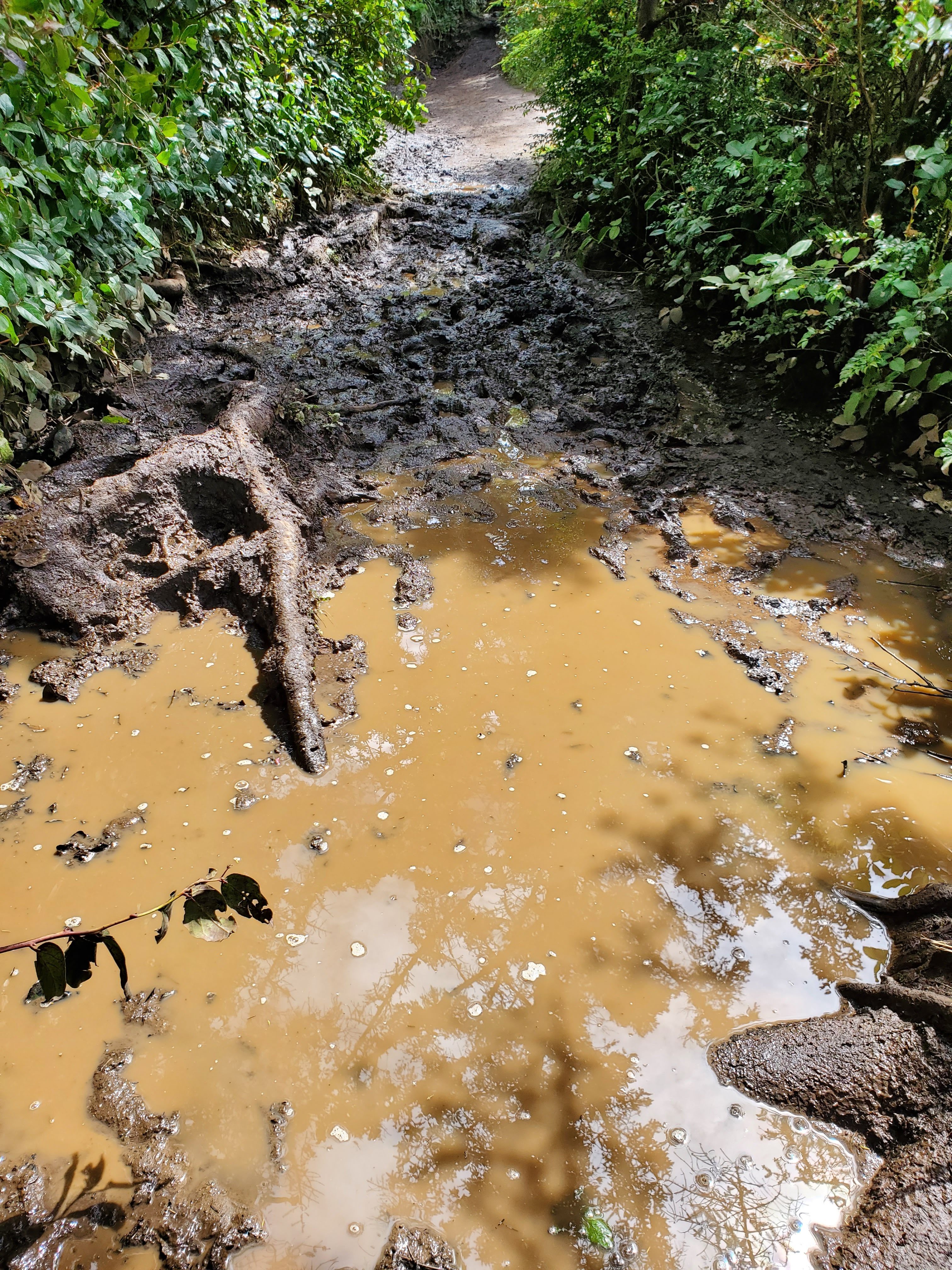
We’re having classic November weather in the Pacific Northwest this year — rain for days, followed by a few cloudy days, then more rain. This season has a lot to offer hikers, with lush green forest floors, ferns and fungi. But rainy hiking comes with a price – mud.
Mud can make or break a hike. You might get to a point where the mud cakes your boots, your feet disappear as if in quicksand and you find yourself calling it quits. I’ve passed many a hiker turning back on a trail because they weren’t prepared for the sucking, slimy, filthy nature of the mud.
Over the years, I’ve learned how to navigate mud the hard way. I have a few tips for preparing for muck so you can embrace the beauty.
At Home
Successful mud navigation begins with deciding that it’s okay to get muddy. Once I’ve cleared that hurdle, I can move on to the rest.
What to Wear
I wear clothes that I don’t mind getting muddy. This sounds simple, but I’ve hiked many a trail trying to avoid the mud until I finally say to myself: “Didn’t you wear these clothes because it’s okay to get them muddy?”
I own hiking pants that have dirt molecules from three continents, seven different countries and numerous states. Mud has frequently reached all the way from the hem of my pants to the tops of my thighs. Despite hundreds of coatings, a good laundering removes the stains, leaving me ready for my next hike. And if the trousers don’t come entirely clean, well – they’re hiking pants. I’m not planning to wear them to a debutante ball.

Footwear Matters
The right footwear makes the difference between arriving at your destination or turning around halfway there. The wrong socks, once soggy, will rub against your feet, creating blisters. Mud will suck flip flops off your feet.
To prevent that, I’ve invested in lightweight, water-resistant boots and wool socks. Bonus: with my boots, I can step in a shallow stream and not get my socks wet, allowing me to continue enjoying the trail without worrying about my appendages. If the socks become damp, the wool keeps my feet warm, and the socks don’t slide around.
Stick with Sticks
Whether it’s hiking poles or a couple of long, straight branches, I bring something for additional support. This can save me from becoming muddier than necessary, which happened to me on a hike when I forgot my poles. I climbed a muddy slope, slipped on slick ground, and ended up with muddy shin stains as well as muddy hands. Hiking poles or sticks can also save you from falling on dry ground, preventing you from tearing your hiking pants and bruising your thenar eminence, the meaty part of the hand beneath your thumb. Not that I would know anything about that.
There’s An App for That
Before I leave the house, I check for updated trail information. Often, this comes from the local, state or national entity that services the trail, such as the National Forest Service or the state park system. I also check AllTrails, which features recent reviews from hikers, who sometimes reveal if the trail is muddy. They may also offer other handy information, such as “The directions to the trailhead were wrong,” or “We saw five rattlesnakes on this trail.”
Put Towels, Shoes and a Change of Clothes in the Car
Self-explanatory.
On the Trail
Once I’m out on the trail with my gear, I finally encounter the first swath of mud. There’s no skirting around it. So, what now?

Slow Down
I stop and survey the (muddy) ground before me. At first, it may just look like a mess, but soon I see patches where the mud is deeper or shallower, wetter or drier. I notice small sticks that could allow my boots to stay above the worst of the muck. I check to see if spots are close enough to step from one to the next. I chart my path through it in my head.
Speed Up
Once I’ve found what looks like my way through, I move carefully, but I don’t linger. The longer your foot stays in one place, especially the wrong place, the more likely your boot will get stuck. If I miscalculate and end up with my boot encased in gluey brown stuff, I continue to the next small “island” with my other foot. I knew I’d likely get muddy, so I came prepared.
The Long Slog

The triumph of besting my first muddy patch can quickly fade as I encounter another and another and another. Hiking a muddy trail takes stamina and perseverance. It can lead to an existential question: “Is this hike worth it?”
The answer to that question varies by individual, and by the hike.
In 2022, when flowers bloomed and waterfalls filled, my mother died after a long illness. Untethered and bereft, I fled to the Oregon coast for a few days of respite in the woods.
I heard about a nearby trail that followed a spit to a point that looked out over the Pacific Ocean. Despite the clear skies, the state park website indicated the trail was incredibly muddy. Hikers also said that the view was worth it. So, I prepared for mud and headed out.
My pants soon became painted black with mud. I panted from the extra exertion created by tearing my feet out of the muck and planting them back in.
I encountered disappointed hikers who had turned around – many wearing shorts and sandals, or designer hiking clothes that they probably never meant to get muddy.

I kept going. When I arrived at trail’s end, I felt as if I had reached edge of the earth. The cliff plunged down into the blue waters of the Pacific. A pair of bald eagles soared on the thermals and alighted on a large pine tree below where I stood.
I sat at earth’s edge and thought about my parents, both gone, who had taught me to love nature, and to persevere in the face of adversity. I missed them terribly. Despite my grief, I felt the exhilaration of being a part of nature, wrestling with the mud and soaring on the wind. I felt my parents there with me.
In that case, mucking through the mud was worth it.

Leave a Reply