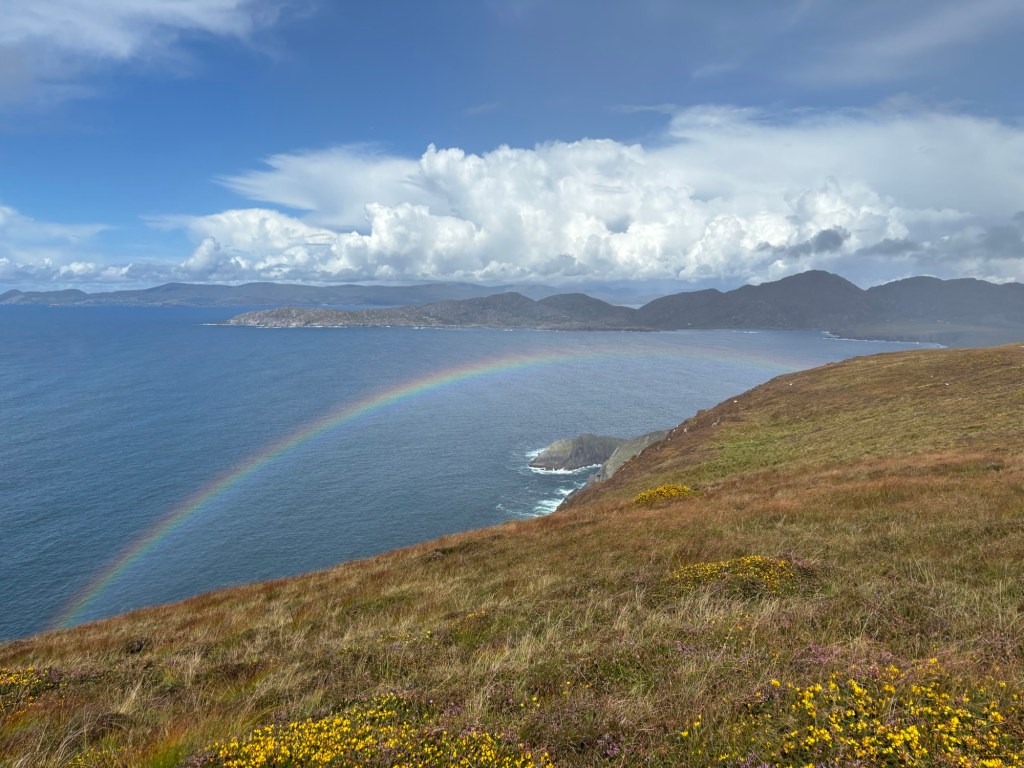
During my recent trip to Ireland, you could count on the weather daily. Count on it to rain, that is.
Showers didn’t always materialize during the day. Some mornings I awoke to clear skies and damp grass. Other days precipitation would come in the evening as I walked to a local pub to find fish and chips.
When rain did come during daylight, it might take the form of a sprinkle, or pour steadily for an hour or two. Water could come from anywhere, at any moment.
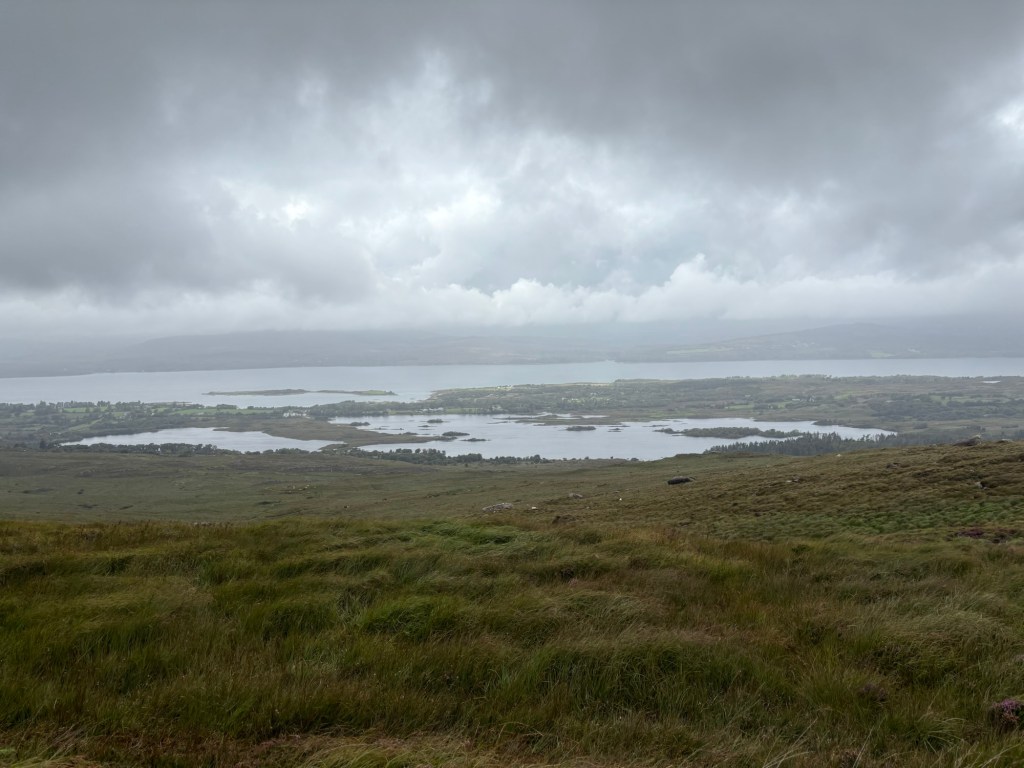
I conversed daily about the weather with my hosts and fellow guests. Weather matters when you are hiking outdoors for seven hours a day on uninhabited trails, up and down windswept hills, with nothing but sheep for company. The day before I started, four people lost their way, slipping and sliding in the clouds, and had to be rescued from the mountain.
I came prepared. I wore sturdy hiking boots and poles. I carried a waterproof jacket, wide-brimmed hat, pants and cover for my pack. I stuffed my power bank in a dry bag for extra protection, in case I needed power in an emergency.
My first morning on the trail started out with sweeping clouds blowing across a blue sky. After two hours or so of climbing 2,500 feet, I watched the sun’s rays reflect silver on the bay. Five minutes later, I felt the first tentative droplets. I slid off the pack, donned my rain jacket, shrouded the backpack in the rain cover and worked the zippers on the rain pants to slide them over my boots. I topped my head with the insulated, waterproof, wide-brimmed rain hat, and carried on, satisfied in my ability to stay warm and dry.
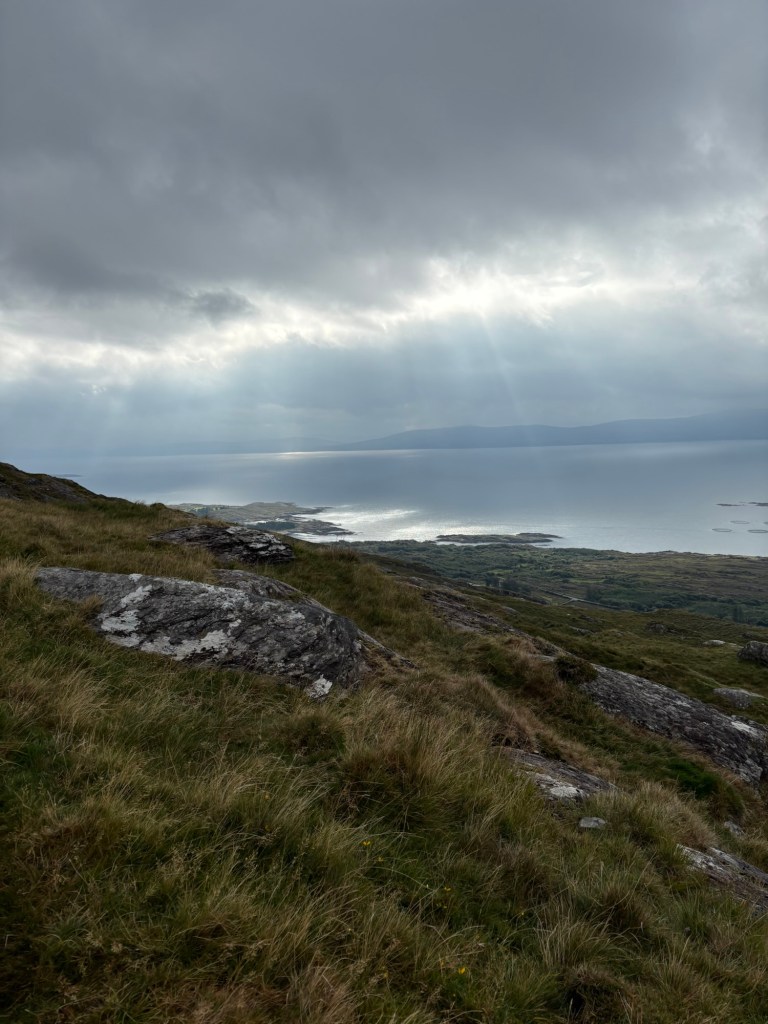
The next few days, I would gaze out the window at breakfast and remark to my host: “A beautiful day out there today!” To which they would inevitably reply with some version of: “I expect there’ll be rain later on.”
Never mind that pessimism, I thought to myself. I’m going to enjoy this weather while it lasts.
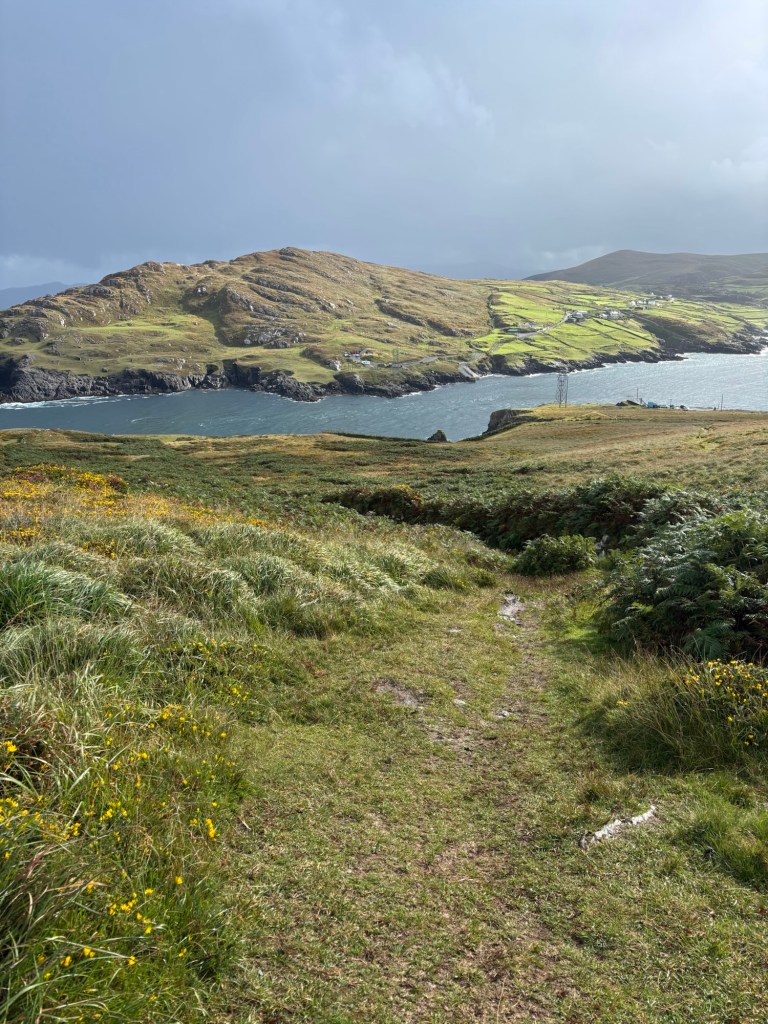
When I got to Dursey Island, the sun played hide-and-seek behind clouds of varying shapes and sizes against a backdrop of blue sky as the wind blew in gusts out of the Atlantic. I stopped on the steep hillside to take photos of the area I had just walked from. The morning sun beat down on my skin, reminding me to re-apply my sunscreen.
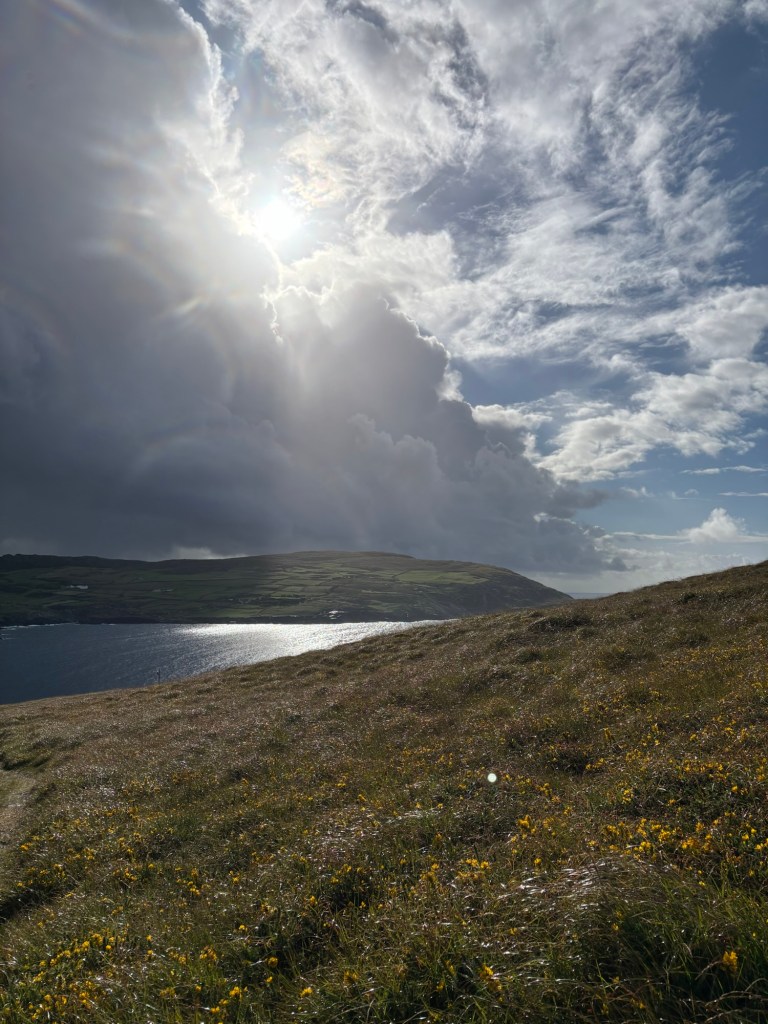
As I returned the sunscreen to its pocket, I felt a tap-tap-tap on my pack. I saw droplets hit the ground. I turned to look behind me up the hill, and a wall of moisture slammed into me.
I dropped the pack and opened it swiftly, yanking out the rain gear as a deluge unfurled. I threw the jacket on, then the hat, trying to see through the pounding raindrops. I slid the cover over the pack.
By this time, my hiking pants were wet. I fumbled with the zippers on the rain pants, cursing the slickness of my soaking hands. Once they were on, I could feel the dampness of the pants underneath.
Okay rain, the joke’s on me! I thought as I peered through my foggy glasses dotted with water.
An hour later, the showers had moved on. I hiked the next five hours under a cobalt sky, the wind drying me out as my footsteps followed the path to Allihies.
Near the end of the trip in Ardgroom, as I sat at breakfast, I looked at the weather forecast on my phone, which showed cloudy skies. Then I gazed out the window, where it was pouring down water from above.
“Let’s give it a bit of time,” my host, John, said. He was driving me and another guest into town to start the day’s hike. “There are two routes today, one that goes up into the mountains and another that follows the road.”
We waited an hour. The downpour showed no signs of stopping. So, I put on my gear, John drove us to the village shop.
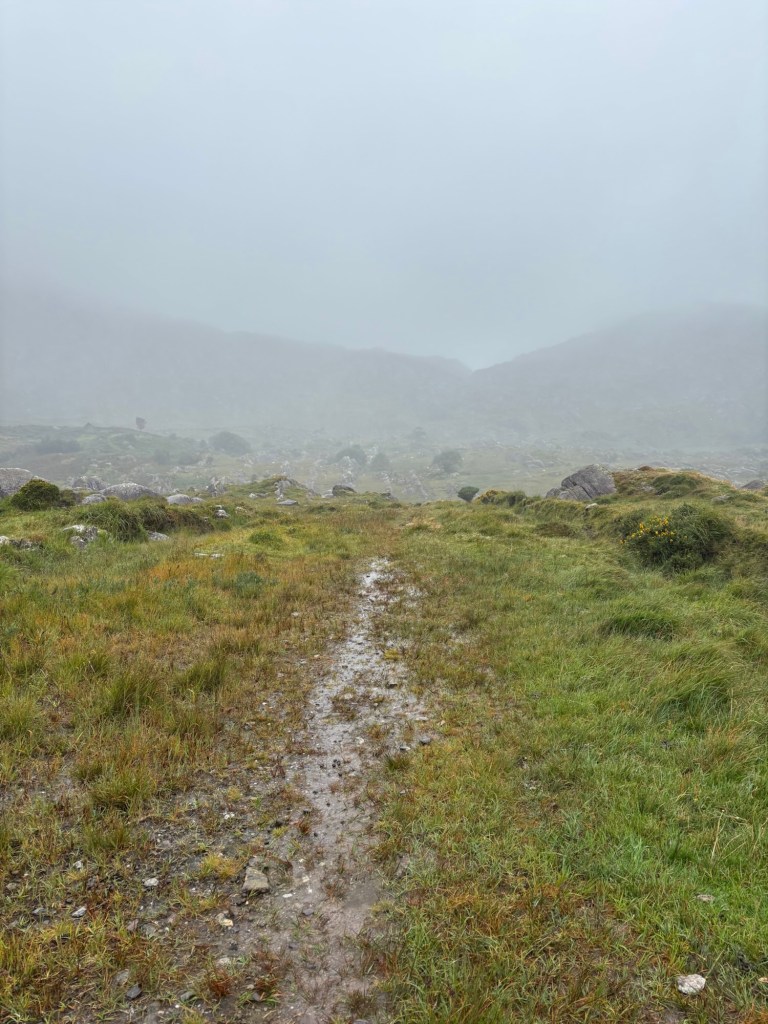
I was the only one that day to choose the mountains.
The water droplets tapped rhythms on my head and shoulders. The air smelled of vegetation and minerals. Liquid streamed down the hillsides, a massive shallow river beneath me. My boots squelched with every step. Wind whipped my hair and made my hat dance, and my wool socks and outer layers encased my body in warmth.
I laughed as I watched nearby sheep shake the wetness from their wool coats, droplets spraying in all directions, dancing with the downpour. I wondered if they found that shaking helped stave off the dampness.
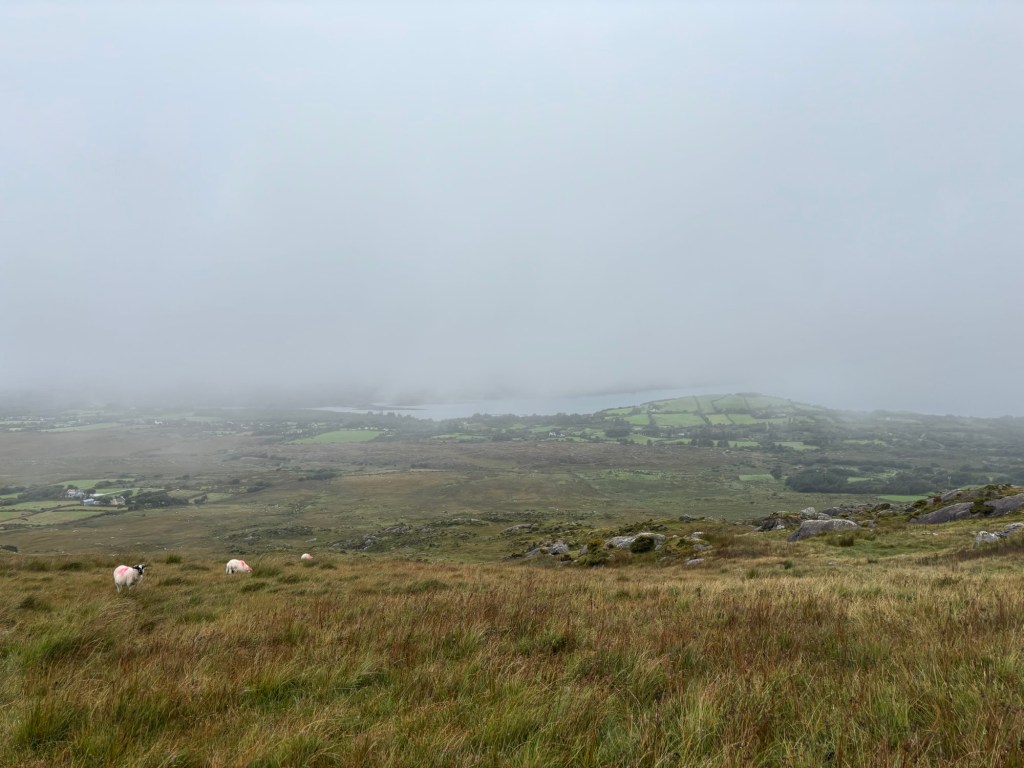
As I climbed, the village below became lost in fingers of fog. Soon it was me and the rain and the “trail.” Trail in quotes because this path used tall posts marked with a yellow hiker and arrows to show the way, as often the grass grows to cover the tracks made by humans and sheep, and sheep don’t always walk the trail.
I found myself hesitating frequently to look for the posts, which had become harder to find between the droplets on my fogged-up glasses and the gray sky. At one point, I reached into a backpack pocket and pulled out a snack bar, doused, watching the bay below appear and disappear through the low-lying clouds.
Obscure objects became sheep, boulders and trees as I approached. The wind sang and whistled in my ears. My feet kept time with the rhythm of the raindrops, water bathing everything, water bathing me.
I was nature.
Out of the mist, a stone circle appeared, erected by Irish ancestors several thousand years ago. I felt connected to them as I walked this rainy path that many footsteps must have taken before me.
The showers eased after I passed the stone circle. I didn’t have time to dry out before reaching my bed and breakfast for the night, so when I got there, I set my boots by the fire and stripped all my wet belongings, hanging them wherever I could to dry before the next day. I took a shower and toweled off. My hostess, Shiela, brought me a cup of tea in the sitting room.
Rainfall returned later that afternoon. I watched it from the comfort of my overstuffed settee, my hands wrapped around my warm cup.
And while it felt cozy in that moment to be inside while watching the water and wind blow outside, I also felt a longing to be out there, to be a part of it.


Leave a comment